

Summary: Bacterial contamination of fertile eggs negatively impacts egg hatchability and chick quality.
Disinfection procedures that reduce the eggshell bacterial load and improve hatchability of high-value fertile eggs can have significant value to the poultry industry.
The ONCE by Signify R&D Team conducted a study to (a) determine the baseline bacterial contamination levels of non-disinfected nest eggs and floor eggs and (b) to compare bacterial reduction between chemical disinfection and disinfection using UVC.
The results indicate UVC, chemical disinfectant, and a combination of the two methods were all effective at reducing bacterial contamination on the shells of nest eggs and floor eggs. Disinfection with fertile eggs could prove to be a cost-effective approach for commercial breeder flocks. UVC disinfection is estimated to cost $0.057/dz and chemical disinfection is $1.45/dz. The results of this study can be used to help producers assess cost-effective strategies for fertile egg disinfection prior to incubation.
View the Study!
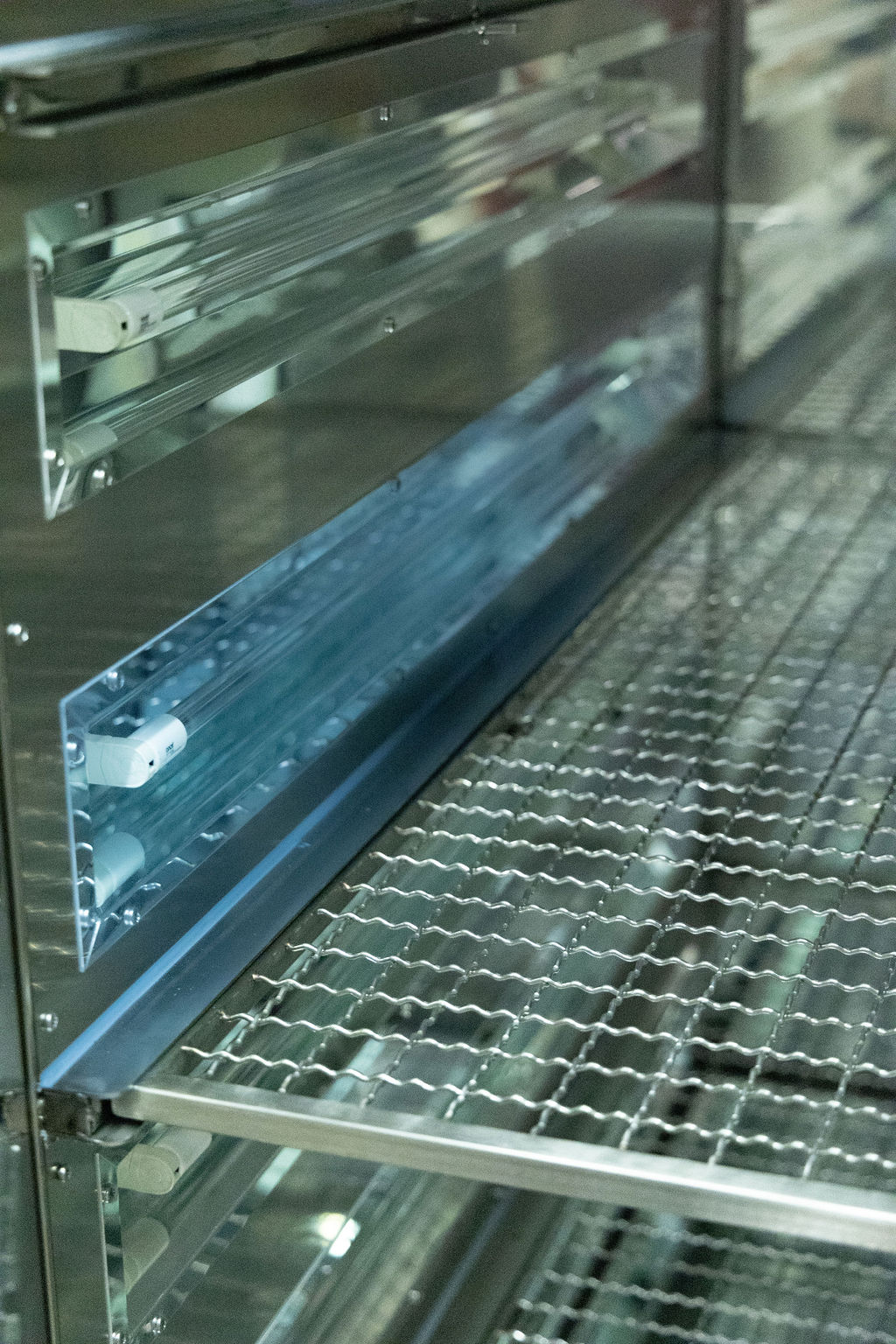
IMAGE: An inside look at a UVC BioShift Disinfection Chamber